Svenska
Cart
Your cart is empty, but doesn't have to be..
Your cart is empty, but doesn't have to be..
ALASTOR PRESS
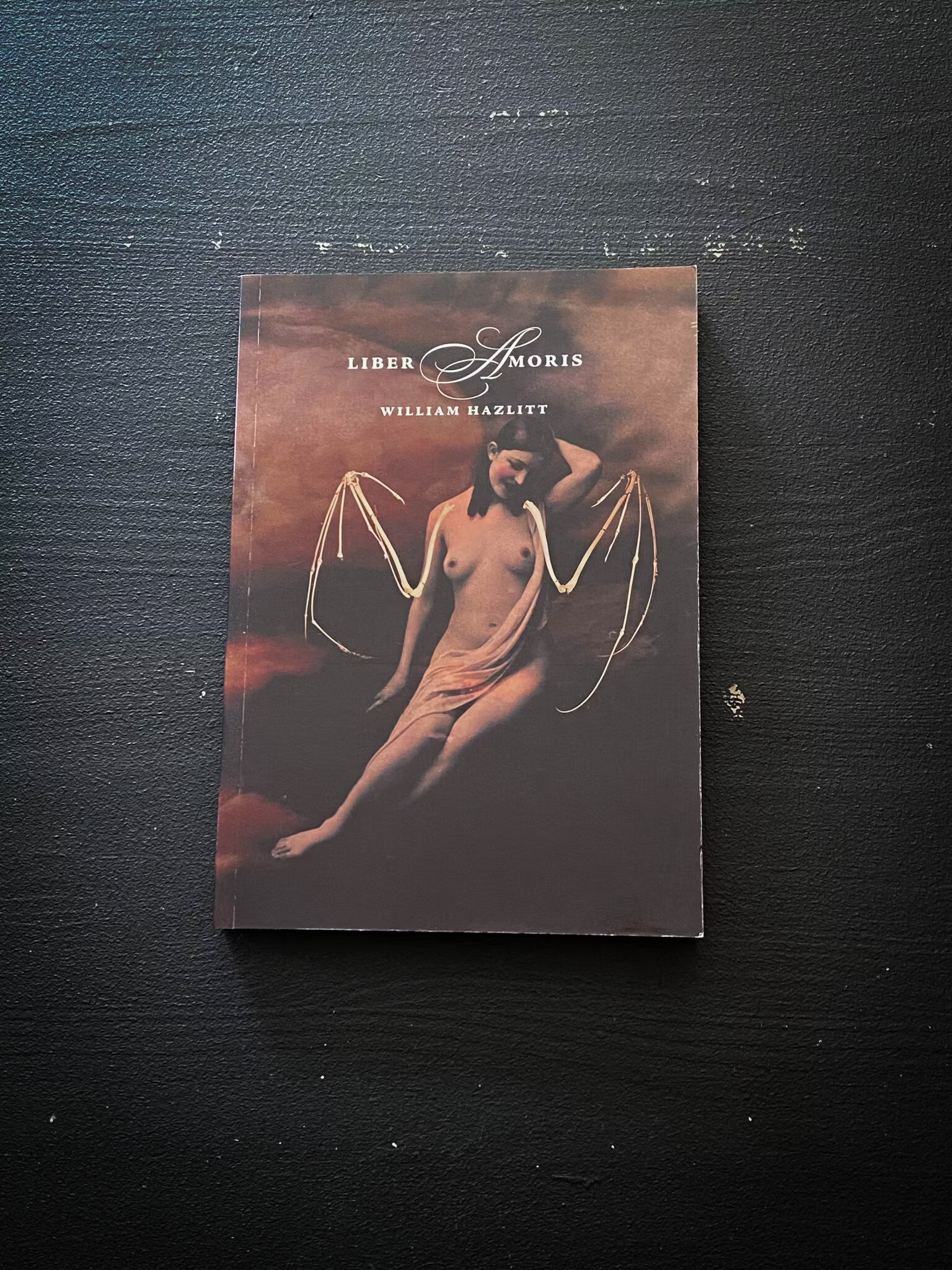
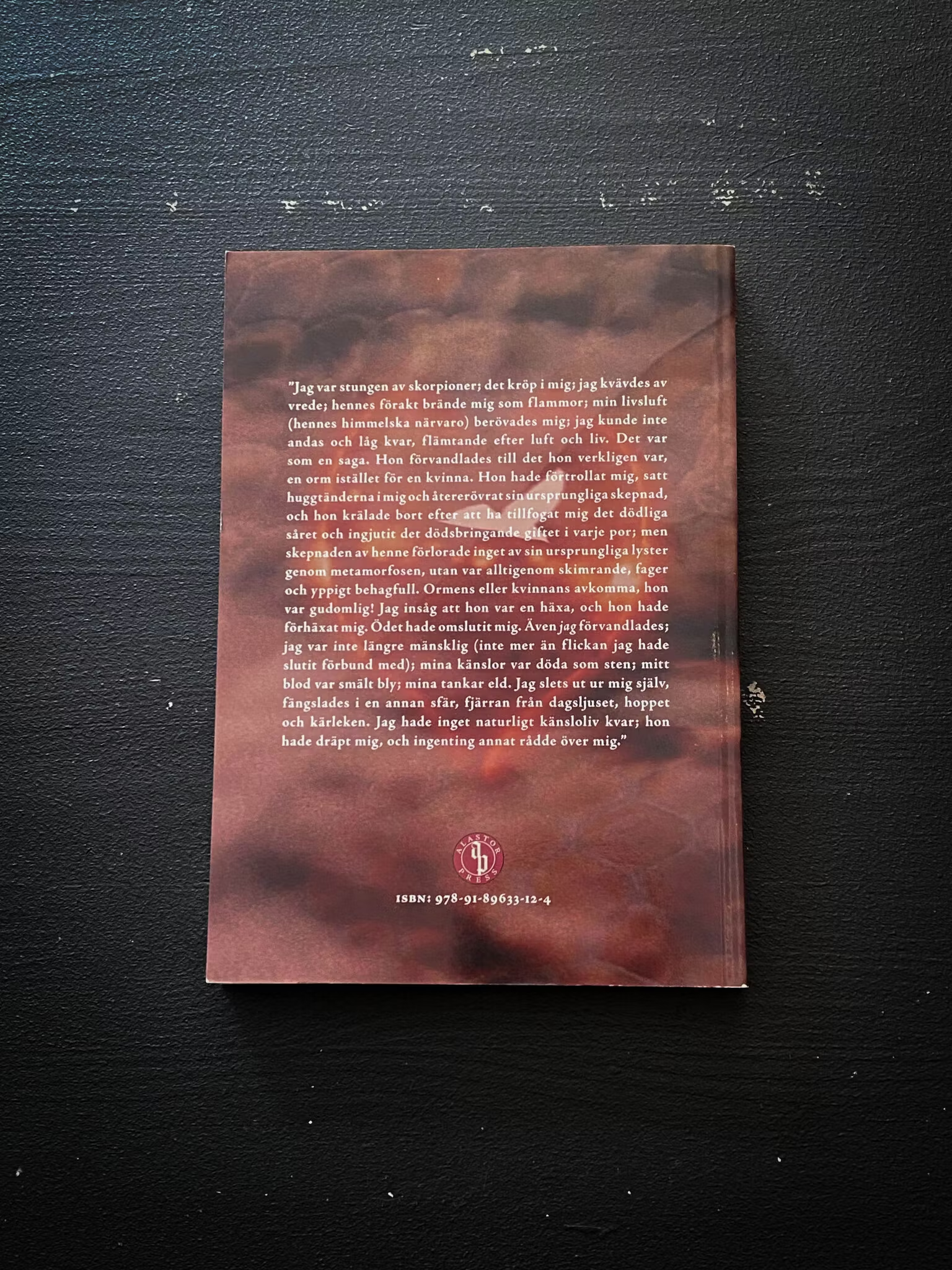
During his lifetime, William Hazlitt (1778-1830) was a feared critic, and many were mowed down by his unforgiving essays, not least the poets Wordsworth and Coleridge. But Liber Amoris is something else, something as unusual as a frank and unforgiving self-confession written as early as the 1820s. It is Hazlitt’s artistic recasting of an unhappy love affair that, according to his own account, almost took his life. Liber Amoris (The Book of Love) was published anonymously in 1823, the same year that Stendhal’s De l’Amour was published, and it immediately caused a scandal.
At the age of forty-three, Hazlitt had fallen madly in love with a nineteen-year-old girl, Sarah Walker, who courted him in the room he had rented at 9 Southampton Buildings, and she would seduce him with her “mocking embraces” and her “lips as worn as the stairs”. One moment he was in heaven, and the next, confused and despairing, he was plunging into the deepest abysses of his soul.
William Hazlitt is still considered, together with Thomas De Quincey and Charles Lamb, to be one of the foremost critics and essayists of the English 19th century. In addition to Liber Amoris, this edition also contains Hazlitt’s amusing and sharp essay “On the Pleasure of Hating”, and this is the first time that these texts have been published in Swedish translation. They are thoroughly annotated by the translator Arthur Isfelt, and J.-O. Almblad has written a full introduction.
Title: Liber Amoris
Original title: Liber Amoris
Author: William Hazlitt
Language: Swedish
Translator: Arthur Isfelt
Designer: Oskar Aspman
Format: Hardcover
Number of pages: 174
Published: March 2007
MORE INFORMATION
Alastor Press is a Swedish independent publisher with a focus on literature that moves in the dark, esoteric and artistically distinctive. The publisher is known for its careful editions of both classic and contemporary works in areas such as decadence, symbolism, horror and philosophical fiction. With an eye for the obscure and cult, Alastor Press highlights writing that challenges, seduces and lingers.